

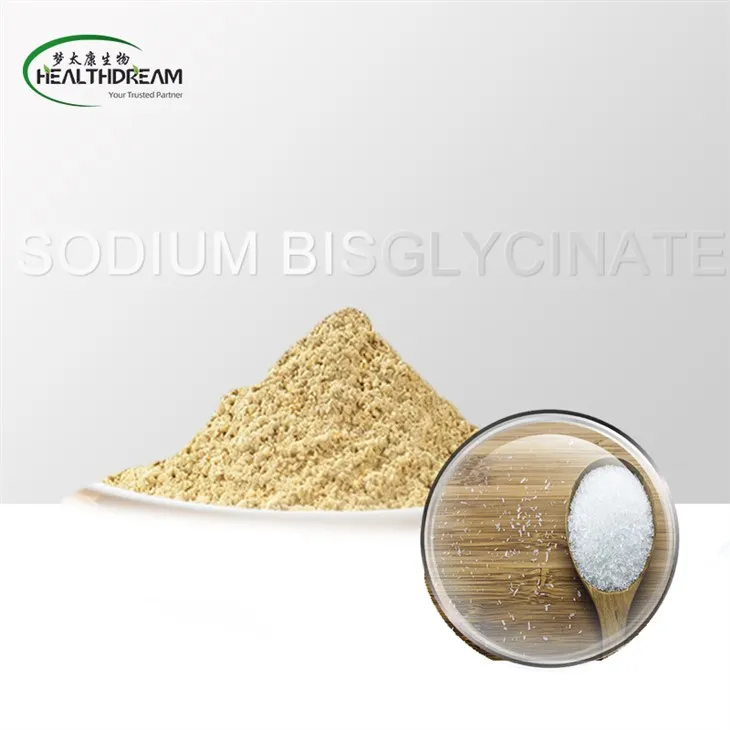
Sodium Bisglycinate

How does Sodium Bisglycinate differ from traditional glycine salts, and what are its advantages in dietary supplements?
Sodium Bisglycinate is a more advanced form of amino acid chelate, where glycine is combined with sodium to offer enhanced bioavailability. Compared to traditional amino acid salts, Sodium Bisglycinate provides better solubility and absorption, making it ideal for improving the uptake of minerals like iron, calcium, and magnesium in dietary supplements. Its gentle and stable nature reduces the common gastrointestinal discomfort associated with traditional mineral supplements, making it especially suitable for the European and American markets, where consumers are increasingly seeking effective and gentle products.

|
Product name: |
Sodium Bisglycinate |
|
Synonyms: |
Glycine sodium salt |
|
CAS No: |
6000-44-8 |
|
Molecular Formula: |
C2H4NO2.Na |
|
Molecular Weight: |
97.05 |
|
Appearance: |
White or slight yellow powder |
|
Specifications: |
Assay> 98.5% |
|
Package: |
25kg/drum |
|
Shelf life: |
2 years from date of production |
|
Storage: |
Store in a dry, clean, cool and ventilated place |
|
Product classification: |
Mineral supplements |
|
Main uses: |
Nutrient enrichment; Food additive; Industrial |
The mechanism of action of sodium:
Sodium is the main positive ion in the extracellular fluid, participates in water metabolism, ensures the balance of water in the body, regulates water and osmotic pressure in the body, maintains the balance of acid and alkali in the body, and is the constituent of pancreatic fluid, bile, sweat and tears. Sodium is related to the production and utilization of ATP (adenine nucleoside triphosphate), muscle movement, cardiovascular function, energy metabolism, in addition, sugar metabolism, oxygen utilization also need to have sodium participation.

|
Product name: |
Sodium Bisglycinate |
|
Synonyms: |
Glycine sodium salt |
|
CAS No: |
6000-44-8 |
|
Molecular Formula: |
C2H4NO2.Na |
|
Molecular Weight: |
97.05 |
|
EC Number: |
227-842-3 |
|
Items |
Specification |
|
Assay%: |
NLT 98.5 |
|
Chloride %: |
NMT 0.01 |
|
Fe %: |
NMT 0.002 |
|
Heavy metals, w/%: |
NMT 0.001 |
|
As %: |
NMT 0.0001 |
|
Burning residue %: |
NMT 0.05 |
|
PH value (20% aqueous solution): |
10.5-11.0 |
|
Moisture %: |
NMT 0.5 |

1. Food additives:
Sodium bisglycinate is used as a food flavor enhancer, used in condiments, beverages, pastries and other foods. Sodium glycine can combine with certain ingredients in food to form compounds that are easier for the body to absorb.
2. Health care products:
Sodium bisglycinate has the ability to maintain immune health and promote the activity of macrophages. It also promotes protein synthesis and is involved in regulating electrolyte balance in the body. Therefore, sodium glycinate is often used in the preparation of nutrients and oral liquids.
3. Industry:
Sodium bisglycinate, as one of the important intermediates of industrial detergents, can enhance the cleaning effect of detergents and reduce environmental pollution.

1. High Bioavailability (Key Advantage)
Iron is enclosed within two glycine molecules, forming a stable chelate ring. This structure protects the iron from reacting with inhibitors like phytates or tannins in the gastrointestinal tract. It is absorbed as an intact "amino acid chelate" via amino acid transport pathways, rather than relying on the ionic channels required by traditional iron forms like Ferrous Sulfate. Its bioavailability is significantly higher compared to conventional iron supplements.
2. Gentle on the Stomach (Non-Irritating)
No Free Iron Ions: Traditional iron supplements release free iron ions that can irritate the stomach lining, causing nausea or discomfort.
Mildness: Ferrous Bisglycinate remains stable during digestion and does not dissociate, preventing corrosion or irritation of the gastric mucosa. It is often referred to as a "Stomach-Friendly Iron" and is ideal for those with sensitive stomachs.
3. No Metallic Aftertaste
Taste Masking: The glycine chelation process effectively masks the unpleasant metallic taste inherent in iron.
Superior Palatability: This makes it perfect for use in liquids, chewables, gummies, and oral drops, ensuring better consumer compliance.
4. High Stability
It exhibits excellent stability in both the acidic environment of the stomach and the alkaline environment of the intestines.

Q1: What is the role of sodium bisglycinate in the food industry?
A: Sodium bisglycinate is mainly used as a flavor enhancer and flavor enhancer in the food industry. Sodium bisglycinate can interact with other ingredients in the food to improve the overall taste and texture of the food. In condiments, beverages, pastries and other foods, sodium bisglycinate is one of the common additives.
Q2: What are the industrial uses of sodium bisglycinate?
A: Sodium bisglycinate is one of the important intermediates of industrial detergents, which can enhance the cleaning effect of detergents and reduce environmental pollution. Secondly, sodium bisglycinate can also be used in the preparation of industrial chemicals such as electroplating solutions, playing an important role.
Q3: How to store sodium bisglycinate safely?
A: Sodium bisglycinate should be stored in a cool, ventilated, dry place, avoid direct sunlight and high temperature environment. Secondly, it is necessary to ensure that the storage container is well sealed to prevent the contact of sodium glycinate with the air leading to hygroscopic or deterioration. In addition, it is necessary to avoid contact between sodium glycine and strong acids, strong bases and other chemical substances to avoid chemical reactions.
Hot Tags: sodium bisglycinate, China sodium bisglycinate manufacturers, suppliers, factory
Send Inquiry
