

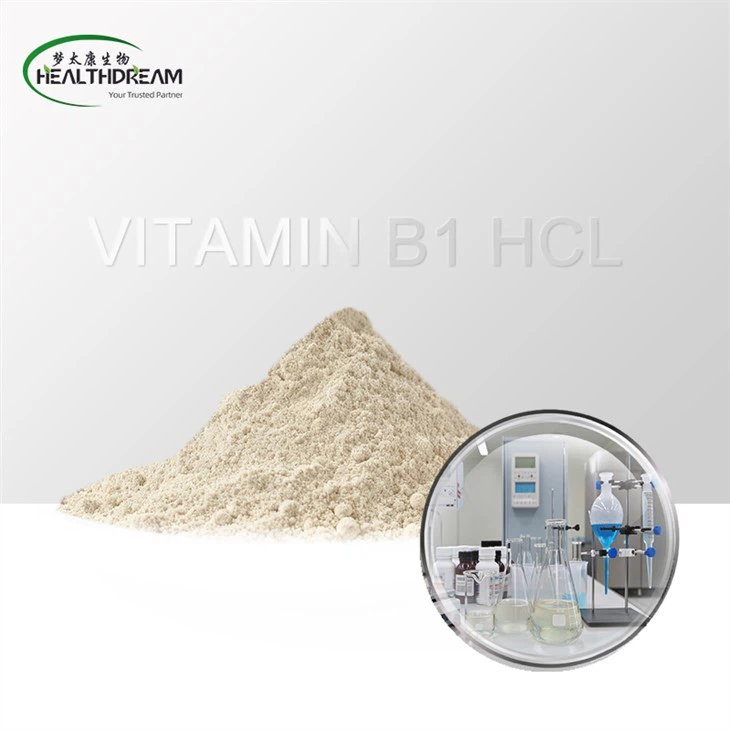


Vitamin B1 Hcl


What is thiamine hydrochloride used for?
Thiamine is used to treat beriberi (tingling and numbness in feet and hands, muscle loss, and poor reflexes caused by a lack of thiamine in the diet) and to treat and prevent Wernicke-Korsakoff syndrome (tingling and numbness in hands and feet, memory loss, confusion caused by a lack of thiamine in the diet).

|
Product Name : |
Vitamin b1 Hcl |
|
Synonyms: |
Vitamin B1 hydrochloride; Aneurine hydrochloride |
|
Specification: |
98.5% ~ 101% |
|
Appearance: |
White crystals or white almost crystalline |
|
CAS: |
67-03-8 |
|
EINECS: |
200-641-8 |
|
Molecular Formula: |
C12H17ClN4OS.HCl |
|
Molecular Weight: |
337.27 |
|
Shelf life: |
3 years |
|
Storage: |
Keep containers tightly closed in a ventilated, cool, dry place, away from bright light. |

|
ANALYSIS |
SPECIFICATION |
|
Product name: |
Thiamine Hydrochloride |
|
Synonyms: |
Vitamin B1 Hydrochloride; Thiamine HCl |
|
Description: |
White or almost white crystalline powder |
|
Identification: |
Positive reaction |
|
Melting point: |
248-252℃ (decomposes) |
|
PH: |
2.7-3.4 (1% aqueous solution) |
|
Clarity of solution: |
Clear |
|
Residue on ignition: |
≤0.1% |
|
Copper: |
<10ppm |
|
Heavy metals (Lead): |
<10ppm |
|
Lead: |
<2ppm |
|
Iron: |
<5ppm |
|
Arsenic: |
<1ppm |
|
Oxalic acid: |
<0.2% |
|
Sulphate ash (Residue on ignition): |
NMT 0.05% |

- Pharmaceutical Field: Used in the preparation of oral tablets, injections and other formulations for the prevention and treatment of thiamine deficiency diseases such as beriberi, neuritis, and gastrointestinal dysfunction; also used as an adjuvant treatment for hyperemesis gravidarum and chronic alcoholism.
- Food Industry: Added as a nutritional fortifier to grain products (such as flour, rice), dairy products, infant formula and functional beverages to supplement the thiamine required by the human body and improve the nutritional value of food.
- Feed Additives: Incorporated into feed for livestock, poultry and aquatic products to meet the growth and metabolic needs of animals, promote animal growth and development, and prevent thiamine deficiency-induced diseases such as reduced feed conversion rate and neurological disorders.

Good Water Solubility: Easily soluble in water, slightly soluble in ethanol, and insoluble in ether and benzene. This property facilitates its formulation into water-based pharmaceutical preparations and food and feed additives, and promotes rapid absorption and utilization in organisms.
Specific Physiological Activity:As an essential coenzyme for the body's carbohydrate metabolism, it participates in the oxidative decarboxylation of pyruvate and α-ketoglutarate, and plays a key role in maintaining the normal function of the nervous system, cardiovascular system and digestive tract.
Relative Stability Under Acidic Conditions: Stable in acidic solutions, but easily decomposed and inactivated under alkaline conditions and when heated. Therefore, attention should be paid to avoiding mixing with alkaline substances during formulation and processing, and controlling the heating temperature and time.
High Safety: It is a natural nutrient required by the human body and animals. When used within the recommended dosage range, it has no obvious toxic and side effects. Excess amounts can be excreted through urine, and there is no risk of accumulation poisoning.

Q1:What is thiamine hydrochloride used for?
Thiamine is used to treat beriberi (tingling and numbness in feet and hands, muscle loss, and poor reflexes caused by a lack of thiamine in the diet) and to treat and prevent Wernicke-Korsakoff syndrome (tingling and numbness in hands and feet, memory loss, confusion caused by a lack of thiamine in the diet).
Q2:What is the difference between thiamine and thiamine hydrochloride?
Their chemical properties are different. Thiamine mononitrate has higher stability than thiamine HCl and is less prone to decomposition in harsh environments such as high temperatures and high humidity. Their bioavailability varies.
Q3:Who needs vitamin B1 the most?
Conditions that increase your need for thiamine, like hyperthyroidism. Conditions that disrupt how your body metabolizes thiamine, like liver disease. Conditions that prevent your body from absorbing thiamine, like chronic diarrhea.
Hot Tags: vitamin b1 hcl, China vitamin b1 hcl manufacturers, suppliers, factory
Send Inquiry
