



Pectinase


What is the function of pectinase?
Pectinase can degrade pectin in plant cell walls, disrupt the colloidal structure to release intracellular active ingredients, improve product clarity, shorten processing cycles, and facilitate efficient production in the food and other industries.

|
Product name: |
Pectinase |
|
Appearance: |
Light yellow powder |
|
Product odor: |
Slight odor of fermentation |
|
Enzyme activity: |
30,000 U/g or customized |
|
MOQ: |
1kg |
|
Packing: |
1kg/bag, 25kg/drum |
|
Storage: |
In cool dry place , away from light |
|
Shelf life: |
12 Months under room temperature 18 Months under 15 ℃ 24 Months under 0 ~ 4 ℃ |
|
Optimum environment: |
50℃ ~ 60℃; pH 3.3 ~ 4.0 |
|
Other influencing factors |
Inhibited by the oxidant, the reducing substances are activated. |
|
Certificate: |
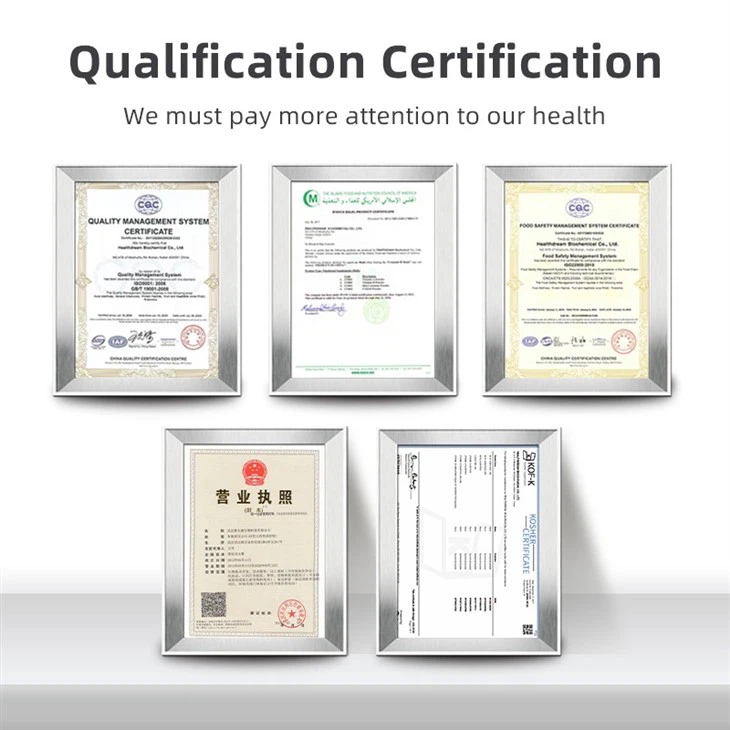
ISO9001, FSSC22000 |
|
Recommended dosage: |
Fruit and vegetable juice processing: 20-50g/ton Wine and fruit wine clarification treatment: 10-50g/ton Plant extract processing: 30-100g/ton Fruit peeling: 1-10kg/ton Tea extract production: 1-10kg/ton |
Mechanism of action
Some pectin molecules carry methyl groups, which can impair the efficiency of pectin decomposition. Pectin methylesterase (PME) first specifically removes these methyl groups, converting pectin into more degradable pectic acid. Subsequently, polygalacturonase (PG) directly cleaves the glycosidic bonds, breaking down long-chain pectin into small-molecule galacturonic acid, while pectin lyase (PL) disrupts the main chain through chemical reactions to generate unsaturated oligosaccharides. Through this series of processes, the original macromolecular pectin is decomposed into small-molecule substances, losing its ability to bind plant cells. Ultimately, this results in softer plant tissues and reduced viscosity of the juice.

|
Product name: Pectinase |
|
|
Items |
Specification |
|
Physical data |
|
|
Appearance: |
Light yellow powder |
|
Odor: |
Free of offensive odours |
|
Activity of enzyme: |
NLT 30,000 U/g or customized |
|
Arsenic: |
NMT 2.00 mg/kg |
|
Lead: |
NMT 2.00 mg/kg |
|
Microbiology |
|
|
Total plate count: |
NMT 10,000 cfu/g |
|
Coliforms: |
< 30 cfu/g |
|
Yeasts&moulds: |
< 100 cfu/g |
|
Salmonella app: |
Negative/25g |
|
Storage: Store humidity protected (RH less than 60) at temperature below 4℃. Shelf life: 12 months when properly stored. |
|

Food industry
Juice/wine processing: Adding pectinase before juicing fruits can break down the pectin in the fruit pulp, reducing the viscosity of the juice and increasing the juice yield; adding it after juicing can promote the sedimentation of suspended particles, making the juice clearer.
Fruit and vegetable processing: Used to adjust the pectin content when making jam or jelly, controlling the viscosity of the product; it can also be used in fruit and vegetable chip processing, helping to remove the viscosity of cell walls and improving the taste.
Feed industry
As a feed additive, it decomposes pectin in feed(pectin is a "anti-nutritional factor" that some animals cannot digest), improving the digestibility and absorption rate of the feed, and reducing the burden on the animal's intestines.
Textile and paper industry
Textile degumming: Natural plant fibers have pectin impurities on their surfaces. Pectinase can specifically remove these impurities, retaining the fibers themselves, and improving the softness and dyeing effect of textiles.
Paper industry: Used in pulp pretreatment to decompose pectin in raw materials, improving the fluidity of pulp and the strength of paper.

High Specificity: Acts exclusively on the glycosidic bonds or ester bonds of pectic polysaccharides such as pectic acid, without affecting other nutrients like vitamins or proteins in raw materials, thus ensuring product quality.
High Efficiency: Rapidly decomposes pectin under mild conditions, significantly improving production efficiency-shortening juice clarification time by over 50% and increasing feed digestibility by 10%-20% while reducing energy consumption.
Broad Substrate Adaptability: Capable of acting on pectin from various sources (e.g., apples, citrus fruits, straw, soybean meal), meeting the raw material requirements of multiple industries including food, feed, and textiles.

Q1: What does pectinase do to fruit juice?
Pectinase facilitates the clarification and filtration of fruit juice, reduces sedimentation, preserves fruit flavor and nutrients more effectively, and enhances the taste and stability of the final product.
Q2: Is pectinase safe for humans?
Pectinase is a food-grade enzyme preparation that has undergone safety evaluation. It does not persist in the human body after ingestion and poses no adverse effects on health. A small number of people should be cautious of potential allergic reactions.
Q3: What specifications of pectinase do you offer?
Healthdream provides standard pectinase powder 30,000U/g and liquid 60,000 U/ml, as well as customized specifications. Different specifications are tailored to various applications including fruit and vegetable juice processing, wine making, plant extraction, and papermaking. For detailed information, please contact our team.
Hot Tags: pectinase, China pectinase manufacturers, suppliers, factory, Cellulase, Papain, Amylase, Pancreatin, Neutral Protease, Cu/Zn-Superoxide Dismutase(SOD)
Send Inquiry
